The satin finish — applied only when the joints are ready.
Once the joints have cured and proven sound, Trident Hurricane CAT5 (a two-part urethane) adds rich satin colour and typically 3–5 winters of protection against salt, stains and organic growth. Most jobs are done in one day.
Is your interlock ready to seal?
Your interlock, after our restoration
Every Natural Finish restoration qualifies 30+ days after the new sand goes down. By then the joints have cured, seen some weather, and we know they're sound because we built them. The sealing visit always starts with a thorough clean so the finish goes onto a clean surface, not six weeks of settled dirt.
Your existing interlock, if the joints qualify
Already have cured polymeric sand joints? The free assessment verifies they're genuinely sound — cured polymeric sand, stable, well-filled — and only then does Seal & Renew work as a standalone service. If we can't verify the joints, we'll tell you what restoration they need first. We don't seal over problems, and we don't seal what we can't verify.
Why fresh joints are never sealed same-day
A coating only belongs over a cured, verified-sound base. Sealing too early hurts both the sand's performance and the sealer's adhesion. On a driveway, an uncured joint under a coating can crack under vehicle weight. (A cured, driveway-rated joint is a different story — see the driveway question below.)
That's why freshly restored joints always wait the full 30+ days before any sealer goes on — no exceptions. Existing joints are different: once the assessment verifies cured polymeric sand in sound condition, sealing can go ahead — including on the same visit as a professional cleaning.
It cures like a system, not a coat of paint.
- Rich satin colour enhancement — deepens and evens the paver colour without looking artificial or glossy.
- 3–5 winters of protection against road salt, staining, and organic growth.
- Cures rather than dries — a two-part chemical reaction, the most durable category of paver sealer.
- Breathes — won't trap moisture, peel, or turn milky white the way hardware-store acrylics so often do.
- Ottawa's first certified installer — we were the first in Ottawa certified to apply Trident Hurricane CAT5.
From $950 +HST · usually done in one day
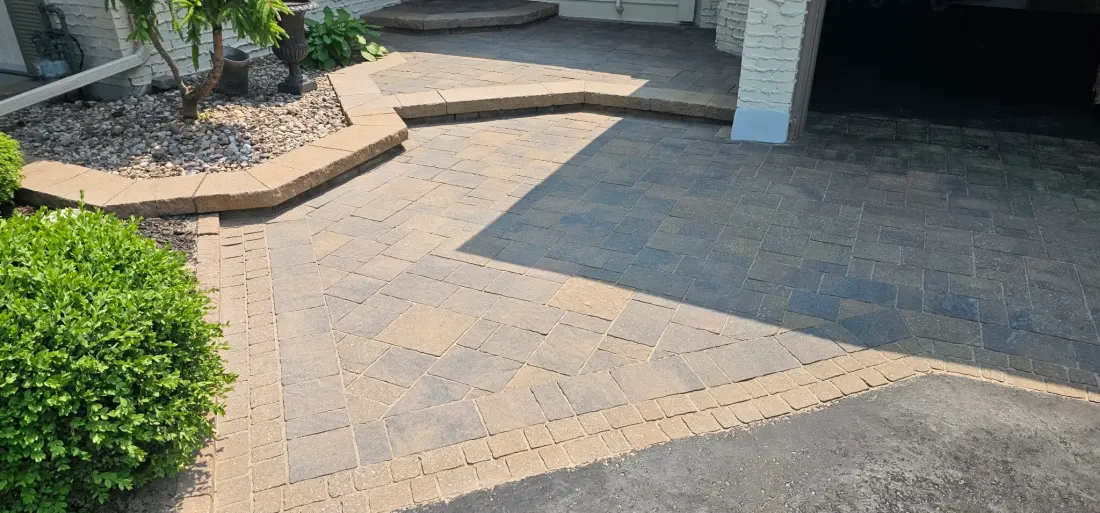
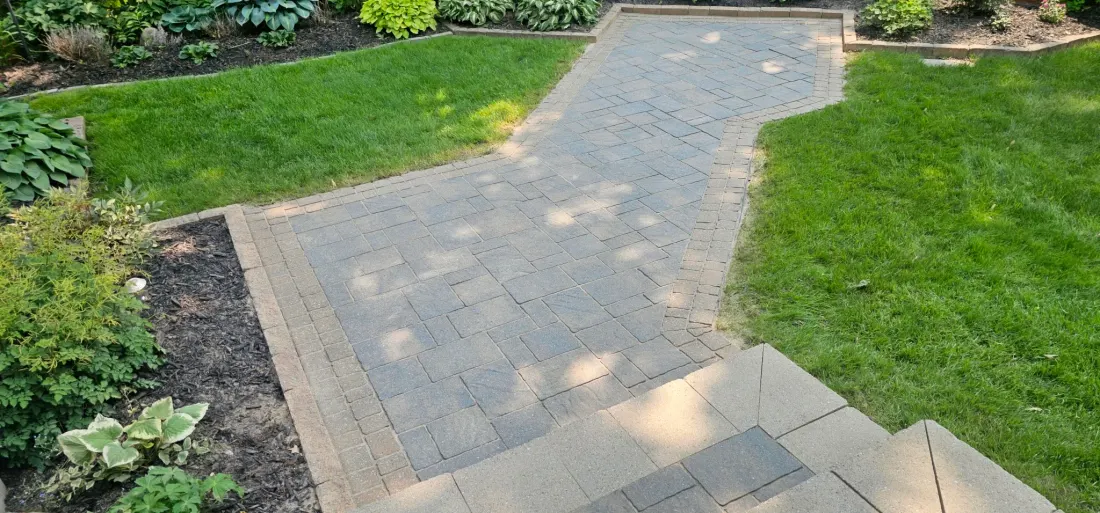
Same walkway. The sealer is the only difference.
This pair is a real job, photographed from the same spot on different days. The top frame is the walkway already restored — washed, re-sanded, unsealed. The bottom frame is the same surface after CAT5. The colour isn't paint; it's the pavers' own colour, deepened and protected.
How to tell it's time to reseal: water on the stone. On a sealed paver, water beads and sits proud; when it starts soaking into the face, the stone is drinking again — and salt and stains soak in with it. This is a test of the paver itself, not the joints: a restored surface is doing its job at the joint either way.
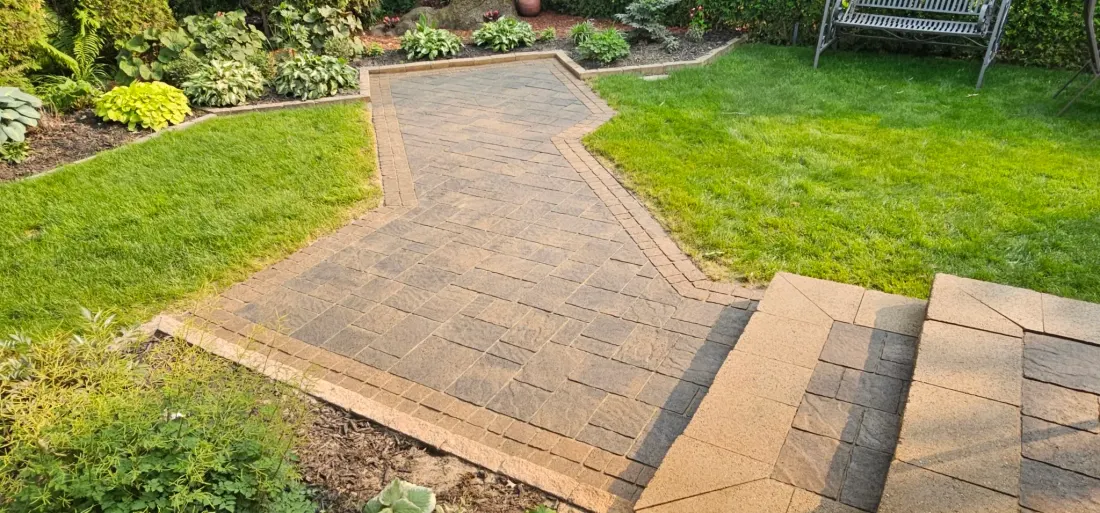
A sealer doesn't expire on a calendar. It erodes.
Dries vs cures — two different products
A one-part acrylic dries like paint. The film stays thermoplastic, can re-soften in heat, and can be dissolved again with solvent — which is why it's cheap and easy to strip.
A two-part urethane cures. Mixing starts a chemical reaction that forms a connected network (more like epoxy). It's harder to wear through, more resistant to salt, and once cured it can't be solvent-stripped. That difference is exactly why our preparation standard is strict.
"Won't yellow" is chemistry, not a slogan.
Cheaper sealer chemistries carry a ring-shaped structure that sunlight slowly converts into yellow-coloured molecules — the film grows its own dye. The premium aliphatic family CAT5 belongs to, per its manufacturer's documentation, has no such ring: there's nothing for the sun to turn yellow.
What actually kills sealers in Ottawa.
Water expands roughly 9% when it freezes inside a paver's pores, and road salt keeps surfaces wet longer — multiplying the freeze-thaw cycles each winter really delivers. A good sealer's job is keeping water and salt out of the pores. What no sealer does: fix a bad base, stop settlement, or make concrete freeze-proof. We'll say so when that's your actual problem.
Why sealed pavers turn white.
Trapped moisture. When a film is applied over damp joints, put on too thick, or applied before the pavers have finished releasing lime, the moisture has nowhere to go. It sits under the film and turns the surface white. This is a moisture-management failure, not bad luck — and it's the main reason joints must be fully dry and cured before any sealer is applied.
Why we wait 30+ days when others won't.
Polymeric sand hardens by drying — firm on top in a day, still releasing moisture deep in the joint for weeks, and only upward. Sealing early puts a lid on that path. Our 30+ day standard is stricter than some sealer labels require; the sand's cure comes first, deliberately.
Routine care, not restoration.
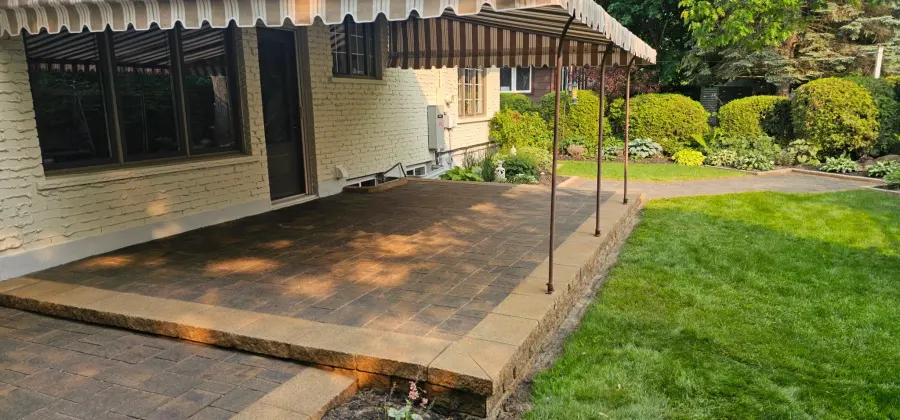
A sealed surface repels what used to soak in — routine care is a gentle wash, not a restoration. Our Annual Maintenance & Warranty program handles it: a yearly OxyShock MAX clean and joint inspection that keeps the finish performing, keeps your coverage in force. When the finish eventually needs renewal — typically after 3–5 winters — it's a clean and recoat, not a rebuild.
One care rule worth knowing: sealed surfaces are cleaned with the right chemistry and water temperature — no harsh chlorine washes, no extreme heat. That's exactly what the annual visit is for.
Landed here but your joints are failing? You need restoration first — sealing comes after the base is sound. Start with Interlock Restoration — Natural Finish.
Common questions.
When can my interlock be sealed?
Two ways in: our own Natural Finish restorations qualify 30+ days after the sand goes down, once the joints have cured and proven sound. Existing installations qualify only when the free assessment verifies cured, well-filled polymeric sand in sound condition. If we can't verify the joints, sealing would trap the problem — so we don't.
How long after polymeric sand can you seal?
Our standard is 30+ days. Polymeric sand hardens by drying — the surface firms in a day or two, but deep in the joint the moisture leaves slowly, and only upward. A film sealer is a lid on that escape route: apply it early and the moisture stays in, which is how sealed surfaces haze and joints fail. Some sealer labels allow less; the sand's cure comes first, so we wait. Deliberately.
What finish will I get?
A rich satin — colour deepened, surface enhanced, without the artificial high-gloss look. That's the only finish we apply: it's the balance of enhancement and discretion that suits Ottawa homes, and it's how CAT5 is engineered to perform.
How long does the protection last?
A sealer doesn't expire on a schedule — it erodes. Sun, tires, plow grit, salt and freeze-thaw wear the film at a rate set by how well it was applied and what it endures. That's why we say three to five winters rather than promising a date, and why the annual maintenance wash matters: it slows the wear and keeps the surface performing between reseals.
How is CAT5 different from what other companies spray?
The common alternative is a single-component acrylic — the sealers that peel and turn milky white. Trident Hurricane CAT5 is a commercial two-part urethane: it cures through a chemical reaction rather than just drying, and it breathes, so it won't trap moisture, peel, or cloud. We were Ottawa's first certified CAT5 installer.
My old sealer turned white — what happened?
One of three look-alike failures: moisture condensed under a film that went on too thick or too soon (whitening), moisture caught inside the film as it dried (blushing), or mineral salts migrating up from the pavers themselves (efflorescence). They need different fixes — which is why we diagnose before quoting, and why prep and patience matter more than what's in the pail.
What about my driveway?
It comes down to the sand in the joints more than the driveway itself. A coating over a standard polymeric sand can crack at the joints under vehicle loads — that is where the blanket "don't seal driveways" advice comes from. A driveway-rated polymeric sand is built for that duty, and once it has cured the risk of cracking under a sealer is low. So a sealed driveway is a real option rather than an exception. What the free assessment settles is which sand your joints actually hold, and David gives you a straight answer for your driveway.
Do stains come out before sealing?
They need to — sealing over a stain locks it in. Rust and oil stain removal is available as a pre-seal treatment, and the included OxyShock MAX wash handles general organic grime. Anything that won't come out, we'll show you before any sealer is applied.
Tell us about the surface you want sealed.
Sealing starts with sound joints — these three answers tell us most of what the assessment will confirm.
Roughly how big?
How are the joints?
Any settled or sunken spots?
Settled spots mean restoration comes first — sealer belongs over sound, level joints. Every Natural Finish restoration is Seal & Renew-ready once cured.
Ready when you are — your answers ride into the enquiry, and the assessment verifies the joints on the surface. When they qualify, CAT5 can go on the same visit as a professional clean.
Skipped a question? No problem — the estimator asks anything still missing, and your answers carry over. You'll see your price range before we ask for any contact details.