Fed by soil test, not by guesswork.
A season-long organic-first program: four visits that keep pH balanced and the lawn fed with formulations chosen for soil health.
Most fertilizers stop at N-P-K. Lawns don't.
Turf needs six major nutrients in appreciable amounts. Most fertilizers supply only three — nitrogen, phosphorus, and potassium. When calcium, magnesium, or sulphur run deficient, the lawn lacks durability, vigour, and colour no matter what else goes down.
That is why this program pairs fertility with soil testing: a written report showing what your soil actually holds, so every amendment corrects something real. Each product complements the others and works as a system.
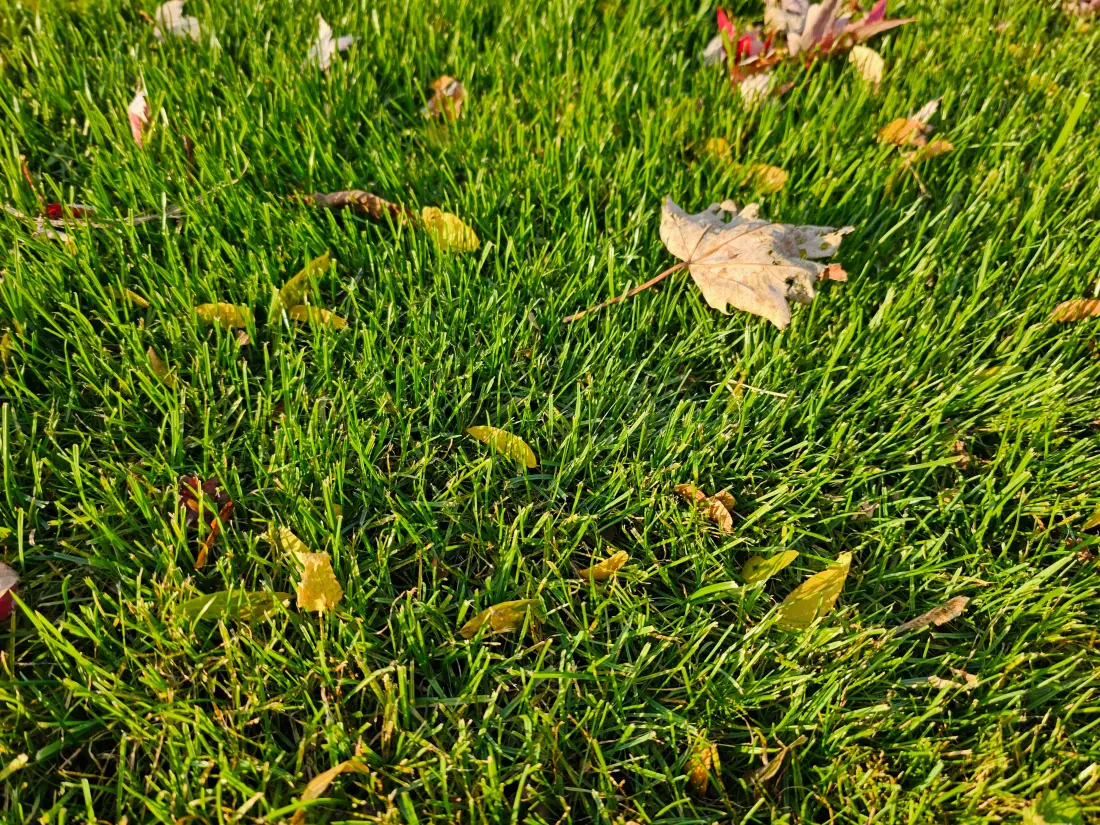
A season on the program.
pH + first feeding
pH adjustment with Solu-Cal humic-acid-enhanced amendments, then the spring feeding — corn gluten, or overseeding instead if the lawn needs density more than weed deterrence.
Growth feeding
A 12-6-12 feeding fortified with kelp extract and humic acid — nutrients plus the biology that helps roots actually use them.
Recovery feeding
A gentler 8-2-2 feeding that carries the lawn through heat stress without forcing growth it can't sustain.
Winterization
A 4-3-8 fall formulation — potassium-forward for root reserves and winter hardiness, so next spring starts from strength.
Four visits, priced by lawn size and confirmed in a plan we agree in advance · soil test and spring or fall core aeration available as add-ons.
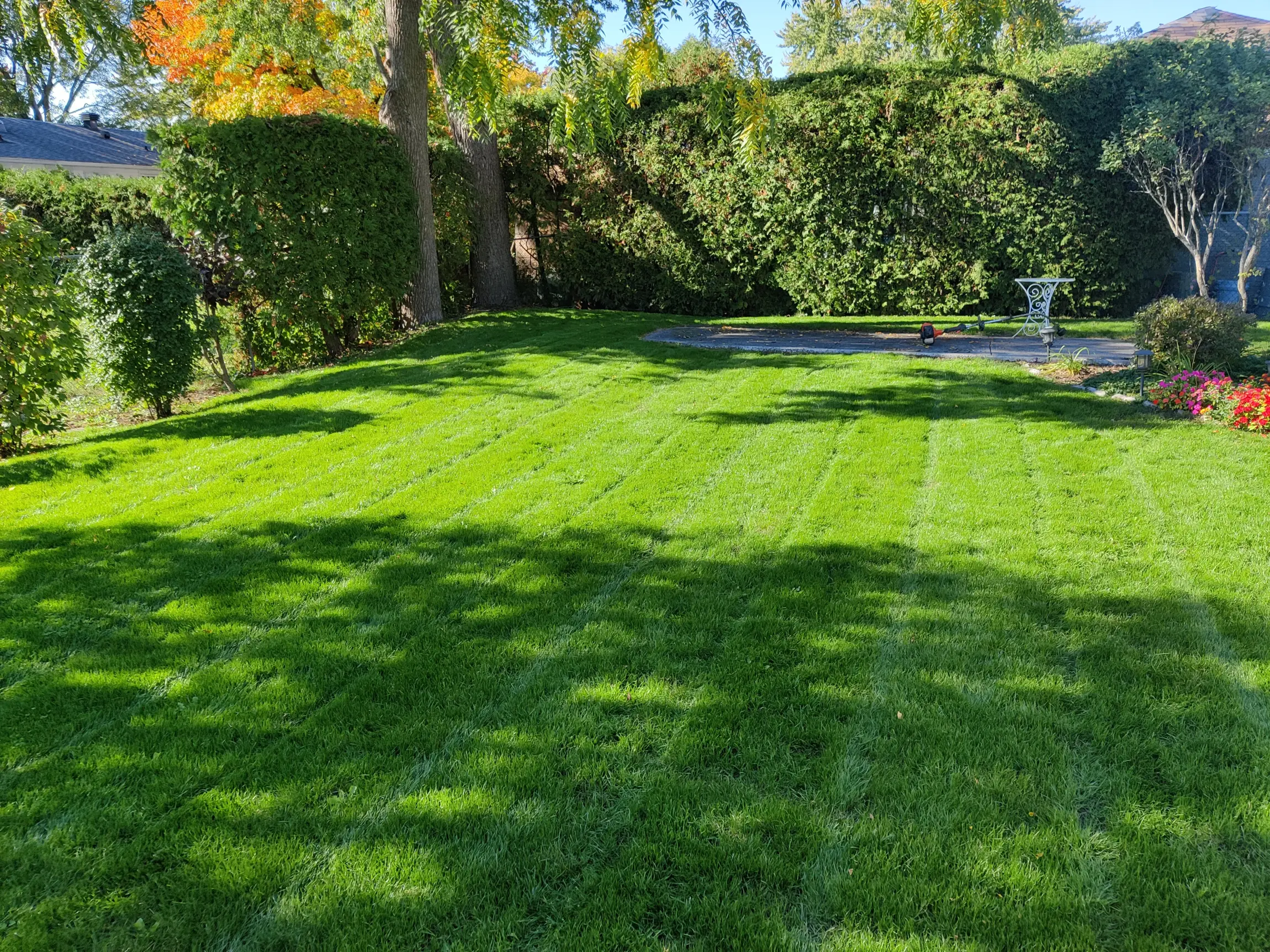
In Ontario, organic is the standard.
Ontario banned cosmetic pesticides in 2009. Every lawn company works within that limit. The real difference is between treating it as a constraint and building a program around what actually makes northern turf strong: balanced soil, organic matter, biology, and the right feeding at the right time.
Organic-first here means compost, corn gluten, kelp, humic acid, wollastonite, and mineral pH correction — matched to a soil test and applied on a schedule that follows the season.
Common questions.
Why do you push soil tests with fertilization?
Because most fertilizers supply three nutrients — nitrogen, phosphorus, potassium — while turf needs six in appreciable amounts. If calcium, magnesium, or sulphur are deficient, the lawn lacks durability, vigour and colour no matter how much N-P-K goes down. A soil test with a written report tells us what's actually missing. Nothing is left to guesswork.
Is this program actually organic?
Organic-first: compost, corn gluten, kelp, humic acid, and mineral amendments, with formulations chosen for soil health rather than a fast cosmetic green-up. In Ontario — where cosmetic pesticides have been banned since 2009 — this is not a premium quirk. It is the professional standard done properly.
What does it cost?
Organic inputs cost more than conventional fertilizers and are applied at higher rates, so the program is priced by your lawn — size, soil needs, and travel — and confirmed in a plan we agree with you before anything starts. Small lawns carry a per-visit minimum. Soil test and spring or fall core aeration are the two add-ons worth discussing.
How does this relate to the Revive program?
Revive rebuilds a struggling lawn's foundation; Organic Plus keeps a healthy lawn fed and balanced across the season. Many clients run Revive first, then move to the maintenance program once the soil is right.
Where do you offer the program?
Where the maintenance rounds run — Orléans. A season-long program is many short visits, and short visits work on a route: we come through the neighbourhood rather than out to it. One-time restoration work travels across the city; a season of visits runs on the round.