A natural mineral that strengthens grass at the cell wall.
Wollastonite is a natural calcium silicate rock dust sourced in Ontario. The silica is what sets it apart: stronger cell walls, tougher grass, and better resistance to pests and disease — resilience built into the plant itself.
Local rock, measurable chemistry.
Sourced from Seeleys Bay, Ontario, wollastonite is a high-grade calcium silicate mineral ground into a fine rock dust — approximately 27% silicon, 16.5% calcium, and 4% magnesium. Calcium benefits most Ottawa soils, but it is the silica content that makes wollastonite different from every other amendment in the toolkit.
Silica significantly strengthens plant cell walls. The research indicates that this translates into improved resistance to pests and fungal pathogens, more upright plant structure, better tolerance of environmental stress, and boosts to photosynthesis, chlorophyll production, and nutrient movement. As agronomist Graeme Sait puts it: "The stronger the cell wall, the more stress-resistant the plant, whether that stress is from pathogens or non-living factors."
Worth reading: Canadian Wollastonite's grub-damage research · CBC: crushed wollastonite helps crops and captures carbon
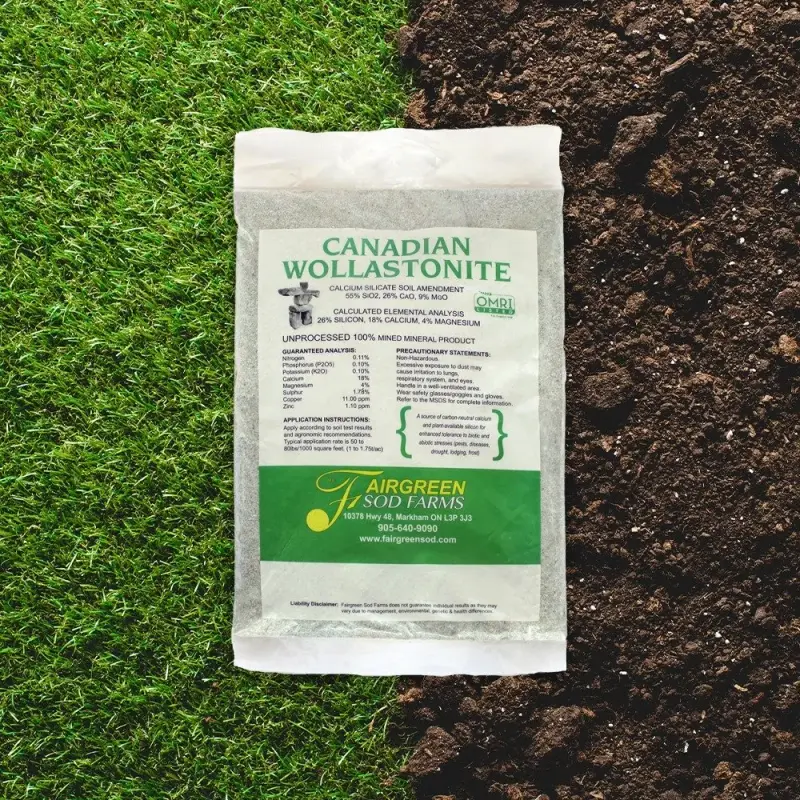
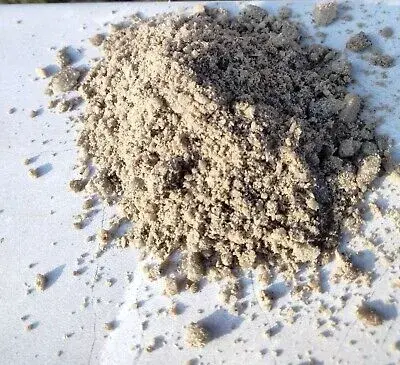
Priced by the area it treats.
Sold by the amount your lawn needs rather than by the bag, so you are not left working out coverage yourself. Pick your size and it lands in an enquiry with the number already attached. David confirms the quantity and the total before anything is charged.
Prices are +HST. Supply only — spreading it is included when wollastonite goes down as part of Revive — Soil Health or a maintenance program.
Common questions.
What exactly is wollastonite?
A natural calcium silicate mineral, ground into a fine rock dust — roughly 27% silicon, 16.5% calcium and 4% magnesium. Ours is sourced from Seeleys Bay, Ontario, about an hour from Ottawa.
Why does the silica matter?
Silica strengthens plant cell walls. Stronger cell walls help grass stand upright, resist fungal pathogens and environmental stress, and trigger natural defence mechanisms. The resilience is built into the plant itself rather than sprayed onto it.
Is it connected to grub resistance?
The mineral's producer, Canadian Wollastonite, publishes research on wollastonite as a natural approach to controlling grub damage. Their work (linked above) is worth reading if you are dealing with grubs. Our approach pairs amendments like this with the fundamentals: dense, deep-rooted turf on healthy soil tolerates pests far better than stressed turf ever can.
How would it get onto my lawn?
As part of a soil program. It is one of the amendments we select when a soil test and what we find on site say your lawn would benefit. It is applied like any other mineral amendment and works alongside compost, pH correction, and the rest of the toolkit.