Dethatching — only when it's needed.
A thin thatch layer is normal and even healthy. A thick, spongy mat is a barrier: it sheds water, blocks feeding, and hosts the problems you are paying to fix. When the buildup is genuinely significant, commercial power raking lifts it out. When it isn't, we will tell you it does not need doing.
A thick mat keeps water from ever reaching the soil.
Thatch is the layer of dead stems and roots that accumulates between the green grass and the soil. Soil biology normally digests it as fast as it forms, but on compacted, low-organic-matter lawns the buildup outruns the breakdown. Past that point, water beads off, fertilizer sits stranded on the surface, and grass roots grow up into the mat instead of down into the ground.
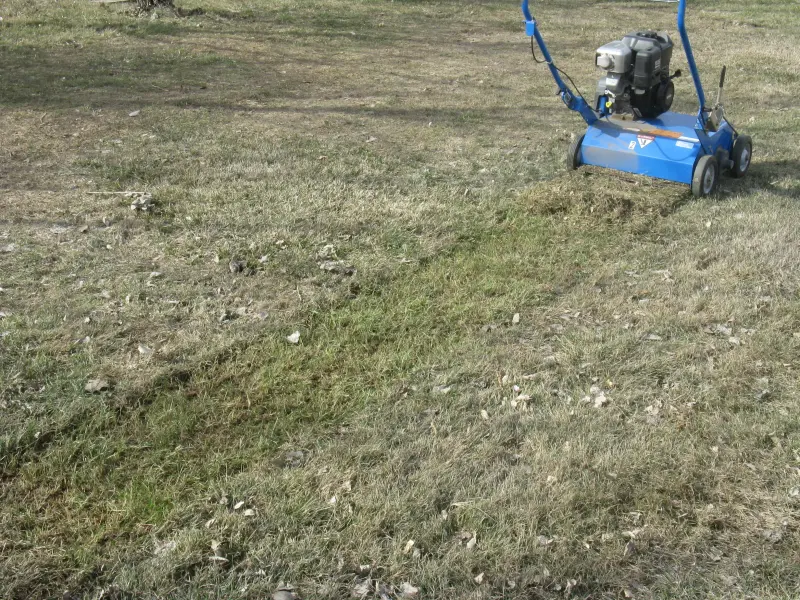
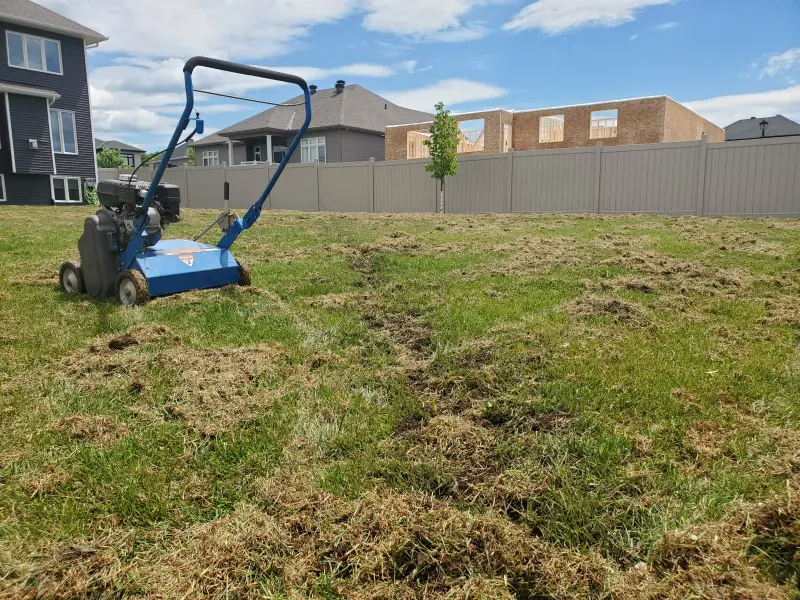
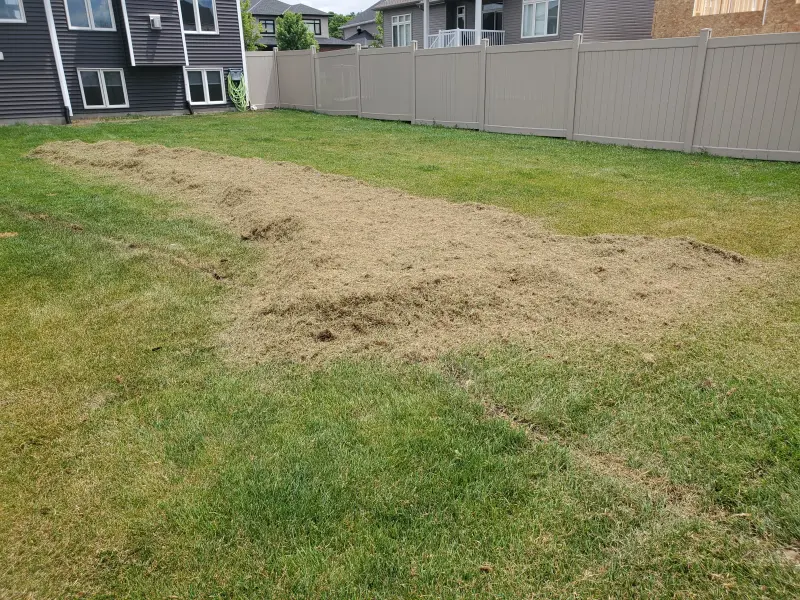
A commercial power rake cuts through the mat and lifts it out. The volume that comes off a neglected lawn usually surprises every homeowner who watches it happen. Cleanup of the dethatched area is included automatically.
- The lawn feels spongy underfoot, like walking on carpet underlay
- Water beads and sheds instead of soaking through
- Grass pulls up easily — rooted in the mat, not the soil
- Matted grey patches after snowmelt that never quite recover
- Feeding and watering seem to do less every year
- A brown, fibrous layer visible between the green and the soil
Recognize a few of these? Worth pricing. If we get there and the thatch layer is still thin, we will say so — dethatching a healthy lawn just stresses it for nothing.
What to pair with dethatching.
Common questions.
What is thatch, exactly?
A layer of dead stems, roots and runners that builds up between the green grass and the soil. A thin layer is normal — even protective. It becomes a problem when it builds into a spongy mat faster than soil biology can break it down: water and fertilizer stop reaching the soil, roots start growing up into the mat instead of down, and the lawn weakens no matter what you put on it.
Does my lawn need dethatching every year?
Almost certainly not — and we do not sell it that way. Dethatching is a corrective for significant buildup, not an annual ritual. Healthy soil biology keeps thatch in check on most lawns, and core aeration speeds that breakdown. We check the thatch layer on site and recommend dethatching only when it has genuinely crossed the line.
Dethatching or aeration — which do I need?
They fix different problems. Dethatching removes the matted layer above the soil; aeration relieves compaction within it. Some lawns need one, some both, some neither. If the thatch is borderline, aeration alone often turns the tide by accelerating natural breakdown — the cheaper fix first.
What happens to all the debris?
Power raking pulls up an impressive amount of dead material, and cleanup of the dethatched area is included automatically. If you would like the rest of the lawn raked and blown clean in the same visit, Lawn Preparation & Raking covers it — we only charge for the area not already covered by the dethatching.
When should dethatching be done?
When the lawn is firm, reasonably dry, and actively growing — typically spring, once the ground has settled, or early fall. Growing turf recovers quickly from the raking; a dormant or soggy lawn doesn't. The lawn is ready for feeding or overseeding right after.
What does it cost?
Priced by area — the online estimator gives you a range for your lawn in about 60 seconds, no email required, with dethatching already selected if you follow the link below.
One-off Dethatching — typical prices
- Townhouse ~1,200 sq ft$215
- Suburban ~2,200 sq ft$275
- Larger ~4,000 sq ft$370
Starting prices, +HST — your exact number comes from your postal code and measured lawn in the estimator, in about 60 seconds.