Precision seeding — into the soil, not onto it.
For lawns with significant thinning, bare patches, or confirmed chinch bug and grub damage that soil work alone will not resolve. Soil first, then certified Pickseed cultivars placed mechanically into prepared ground.
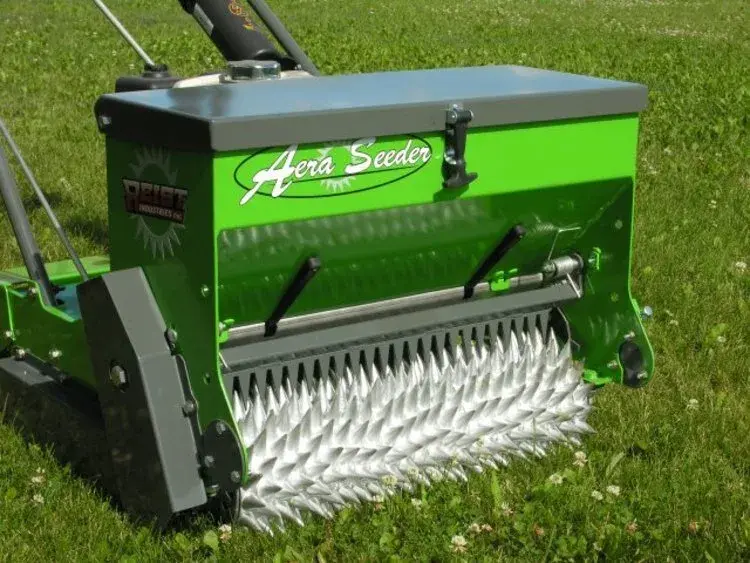
Four things every seeding job gets.
AeraSeeding or slice seeding at 6 lbs/1,000 sq ft
Seed placed mechanically into prepared soil for real soil-to-seed contact — never simply broadcast over the surface, where it dries out and washes away.
Certified Pickseed cultivars, chosen for your conditions
Named, certified varieties matched to your sun, soil, and goals — including endophyte cultivars with natural chinch bug resistance and disease resistance bred for the problems Ottawa lawns actually face. Not box-store blends.
Mycorrhizal inoculant seed conditioning
Seed conditioned with a mycorrhizal bio-fertilizer that establishes fungal root networks at germination — expanding water and nutrient access beyond the physical roots.
Controlled-release rooting fertilizer
A starter feeding programmed for establishment, not a quick green-up that burns out.
Prepared, seeded, established.
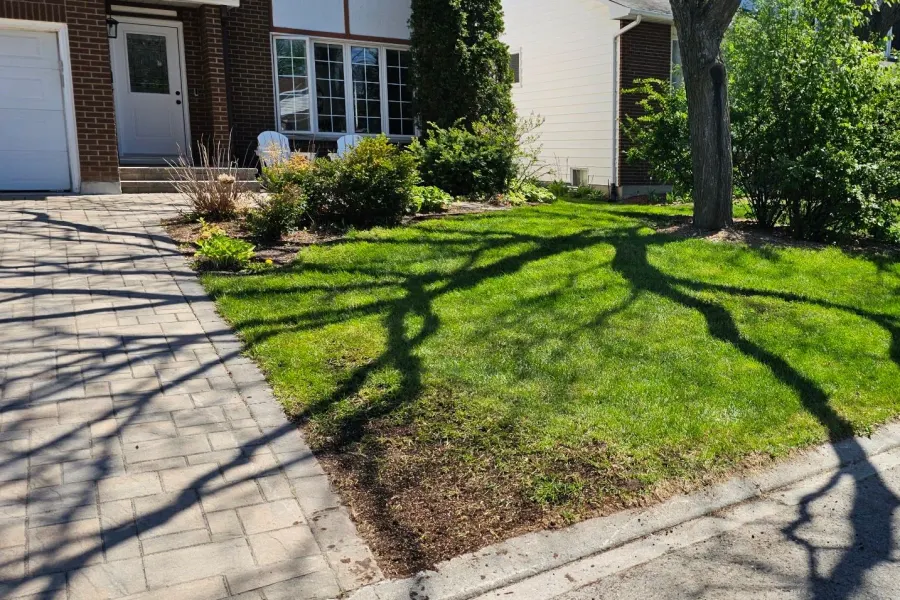
The same Orléans corner lot, photographed from the same spot three times in 2026: thin and matted after winter, then on seeding day, then in summer. The change comes from placing seed into prepared soil rather than sowing it over an unresolved problem.
Spring and fall are both good times to seed a lawn in Ottawa — fall, late August through September, is the prime window.
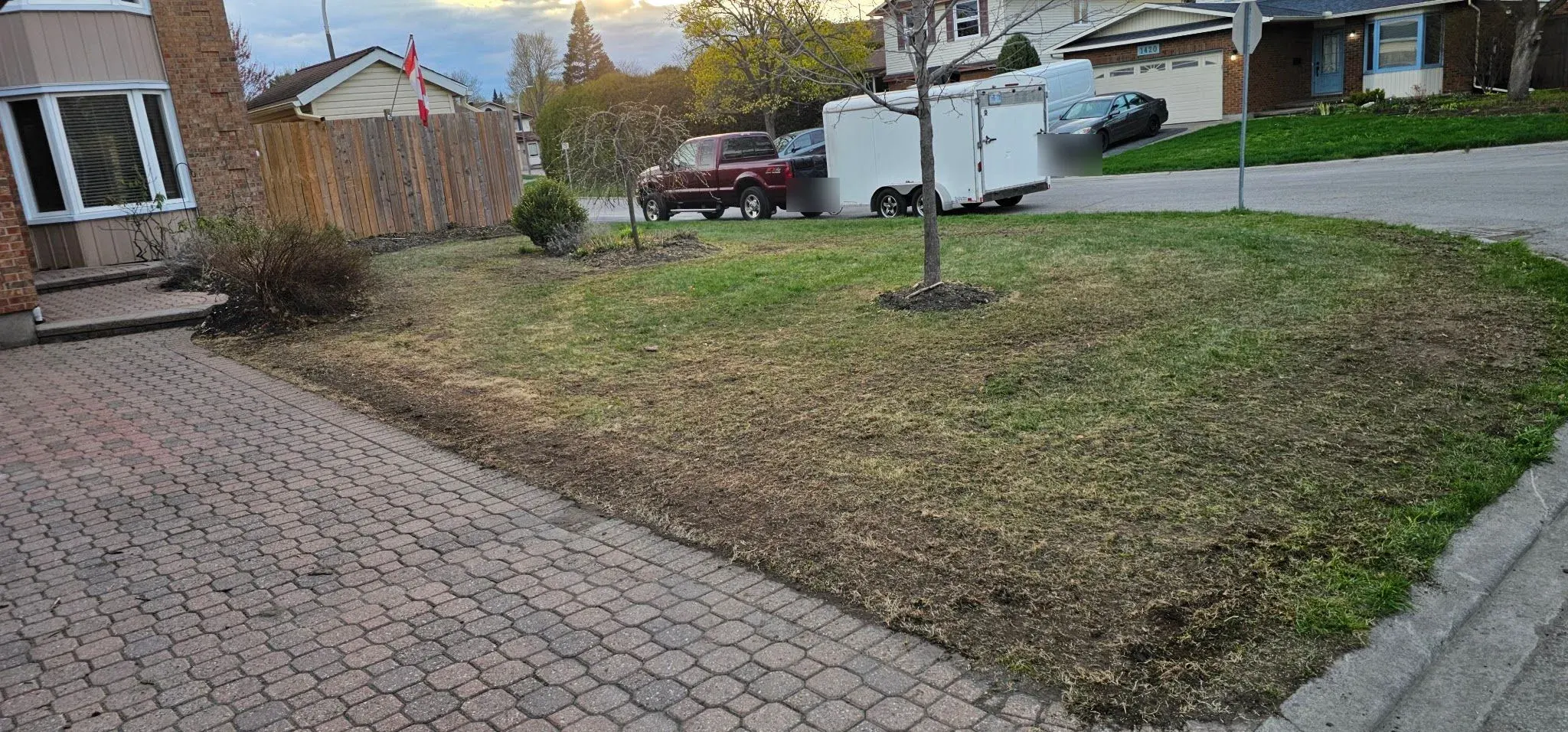
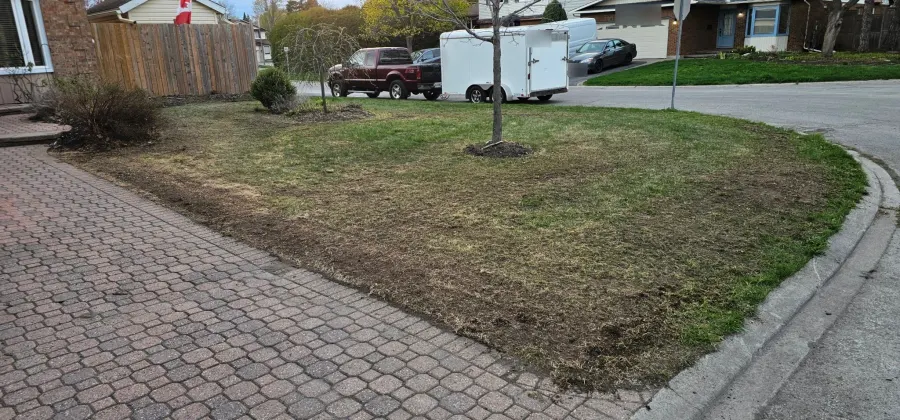
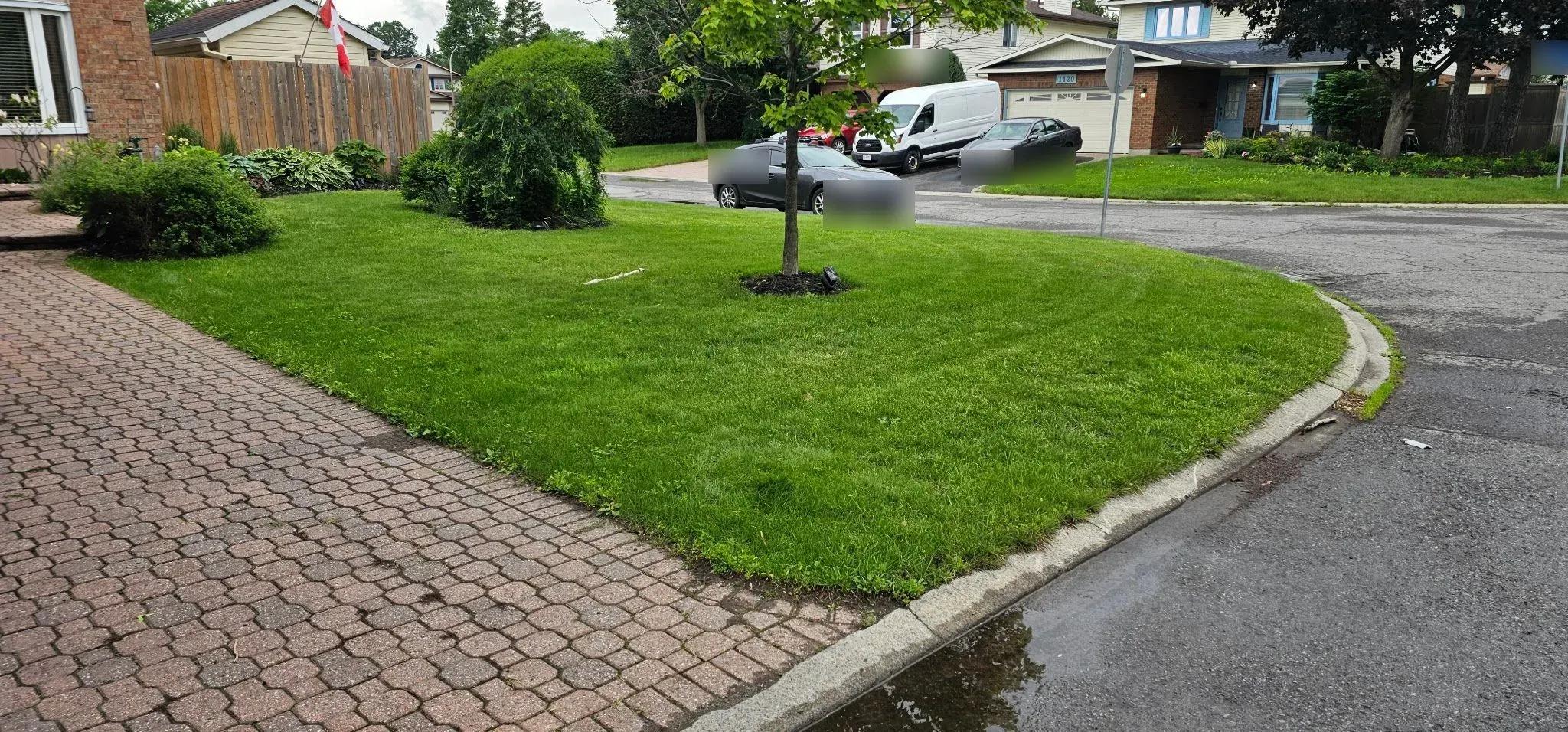
Seeding built to establish and last.
Our seeding is designed so it does not need repeating: soil corrected first, certified cultivars matched to your conditions, seed placed mechanically, and roots fed for proper establishment. If your lawn does not actually need seeding, we will say so.
Common questions.
Why mechanical seeding instead of broadcasting?
Broadcast seed sits on the surface — it dries out, washes away, and germinates unevenly. Slice seeding and AeraSeeding place the seed into the soil at the right depth. That is why our seeding holds where broadcast jobs often thin out by the next season.
Do I need the soil program too?
Strongly recommended. Seed germinates in soil, and if the soil is the reason your lawn thinned in the first place, seeding alone just repeats the cycle. Homeowners who have paid for seeding twice are usually missing the soil work, not the seed.
When is the best time to seed?
Spring and fall are both good times to seed a lawn in Ottawa. Fall — late August through September — is the prime window: soil is warm, nights are cool, and weed pressure drops. Spring is the second-best window.
What about dethatching or topsoil?
Case by case. Dethatching is added when the thatch layer genuinely blocks seed-to-soil contact. Weed-free topsoil levels and fills poor areas, and peat moss helps bare patches hold moisture. All of it gets recommended only when your lawn needs it.
What does it cost?
It scales with the work area and options. The estimator shows you a range in about 60 seconds — no email required — and we confirm the exact price once your lawn is sized by aerial measurement, no separate assessment visit needed.
What if it doesn't fill in?
Germination depends heavily on the watering schedule we leave you — that part is in your hands, and we spell it out clearly on the day of the work. Grass also establishes at different rates in sun, shade, and high-traffic areas, so expect the new growth to even out over a full season rather than overnight.
If an area comes in thinner than it should have, tell us what you are seeing. David looks at what happened and makes it right where the process fell short. That conversation is direct — you are dealing with the person who priced it and stands behind it.
One-off Overseeding — AeraSeeder — typical prices
- Townhouse ~1,200 sq ft$190
- Suburban ~2,200 sq ft$240
- Larger ~4,000 sq ft$335
Starting prices, +HST — your exact number comes from your postal code and measured lawn in the estimator, in about 60 seconds.