Lawn services — build your program and see your range.
Answer a few questions about your property and see your price range in about 60 seconds — no email required. We build your plan from your aerial measurement. David confirms your price by email — usually as a link that opens the finished plan — and if anything needs to change on the day, we check with you first.
Price confirmed by emailBBB accredited — A+Owner-led, every jobOrganic-first programs
No credit card. No obligation. We respond within two business days.
David prepared this plan for your property. Review it below, then reply CONFIRM to his email to book it — you can explore changes freely; the emailed plan stands until you both agree otherwise.
Lawn Services Estimator
Describe your lawn. Build your program.
New property measured — start its plan fresh, or keep your current choices?
New address — this property starts fresh.
Tell us which lawns and the closest house type — that sets the size. Fine-tune with the slider or type it, add your postal code, and the price is real. David verifies the measurement online and confirms your exact price by email.
Which parts of the property?
What kind of property is it?
sq ft
Address carried over from your earlier estimate — edit anything that changed.
Want it exact? Trace it on the satellite photo. Your street address brings up the property from above — paint the lawn and the size fills itself. It's the same tool David uses to fine-tune estimates.
Imagery — Google · frame spans per side ·FrontSideBack
Pick a colour and paint your lawn — the numbers follow. ✦ Fill area floods a connected grass patch in one tap; the eraser wipes driveways and beds.
One finger draws. Use two to zoom in or scroll the page.
Selected total —
Only pricing part of the property? Tap a lawn to leave it out — tap again to bring it back.
Only want one service? Tick just that one — everything you choose here is done in a single visit.
What are you seeing? (pick everything that applies)
Lawn beyond saving — or you want a new one now? Restart — New Lawn (steam & sod) has its own estimator — paint the area, get a range.
Straight to your service — a single service doesn't need the condition questions. They're under step 2 if you want suggestions for anything else you're seeing.
Suggested from your lawn's condition — adjust freely.
Booking ahead?
Nothing ticked yet — choose the services you want priced. Not sure what you need? Step back to Its condition and tell us what you're seeing — we'll suggest a starting point from that.
Fall Leaf Cleanup — priced by visits and leaf volume rather than lawn size, because leaves come from trees. A visit charge for your area plus a per-bag rate — the whole formula is published on the cleanup page, no quote request needed.
Just want the lawn raked and blown clean for spring? That's Lawn Preparation & Raking above. Deep mechanical dethatching is for significant thatch buildup — most Ottawa lawns don't need it every year, and it's recommended only when thatch exceeds half an inch. We can assess on arrival before proceeding.
How much of the lawn?
Partial dethatching includes Lawn Preparation & Raking on the rest — added automatically.
How much of the lawn needs repair?
Of the repair, how much is bare soil?
Bare ground is seeded heavier — with no existing grass to fill in, the whole seedbed has to come from what we place, so those areas get a full establishment rate.
Not sure which one fits your lawn? We'll confirm the right choice with you by email before any work begins.
Spring and fall are both good times to seed a lawn in Ottawa — fall, late August through September, is the prime window.
Add-ons
One pail is 3 gallons of topsoil, compost and certified Pickseed, hand-mixed on site and worked into the edges, corners and tight spots the seeding machines can't reach — enough for roughly 6 sq ft of bare spots at ¾ inch deep.
Loose weed-free topsoil builds up low areas, and covers spots where the ground is too thin or poor for the machines to lift a proper seedbed — spread where the lawn needs it before the seed goes down.
Topsoil goes down with seed — pick a seeding service above and it becomes available.
More than ½ a yard is priced by delivery, so it is not in the estimate shown — David confirms the delivery cost with you and it is added on top of the total.
Your price
—
+13% HST · price confirmed by email — any on-site change is checked with you first
This is our minimum visit charge for your area — the trip itself is the cost driver, not the services. Anything you add to this visit is priced at its marginal cost, because the trip is already covered.
Plus bulk topsoil — more than ½ a yard is priced by delivery and added on top of this total, confirmed with you first.
Spring and fall are both good times to seed a lawn in Ottawa — fall, late August through September, is the prime window.
Interlock driveway or patio with weeds in the joints, or sand washing out? It has its own 60-second estimator — price your interlock restoration.
This estimate reflects typical residential conditions. For properties with unusual features — steep slopes, narrow gates, heavy obstacle density — we may suggest small adjustments to reflect the actual scope. Any adjustment is reviewed with you before any work begins, never as a surprise charge.
Live pricing is briefly unavailable — send the request below and David prices it directly.
Step 2 — Send Your Request
Like your number? Get on the schedule.
Send us your details and David builds your plan from your aerial measurement and a quick conversation about the lawn — usually sending it back as a link that opens the finished plan, painted on your property’s photo, with the price attached. He confirms it by email, then arrives prepared and the work is done that same visit. No obligation and no pressure — you review the plan before anything is scheduled.
A reply within two business days
Your finished plan sent back to review — see it exactly as David built it, on your property’s aerial photo
Your price confirmed by email — and if the lawn calls for a change on the day, it is agreed with you first
A clear recommendation — including when the smaller job is the right one
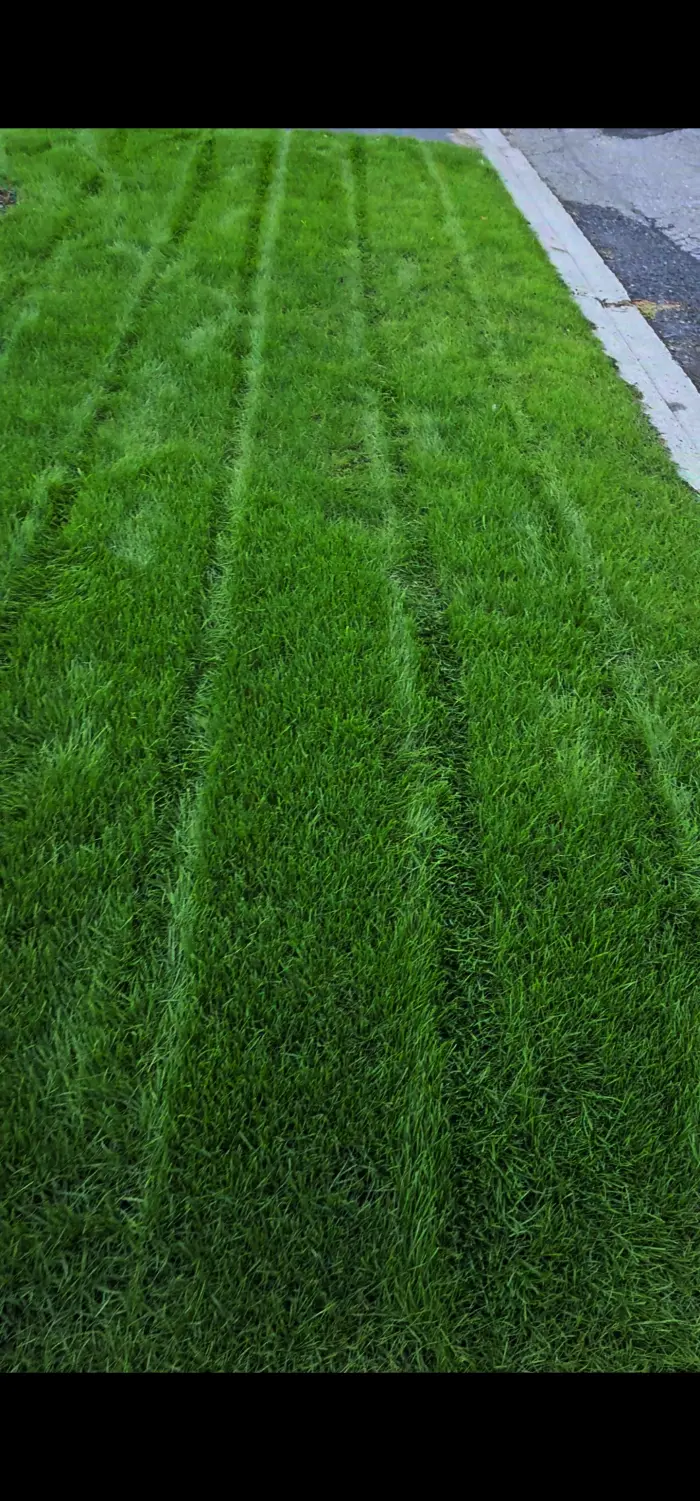
The kind of lawn the plan works toward — a real client front yard.
What Happens After You Submit
We come prepared — and we get it right in one visit.
We show up with the full range of professional amendments on hand, confirm measurements on site, and execute the agreed plan — adjusting to what we find on the ground. One visit, no separate consultation fee — and nothing is charged until you approve and the work is completed.
We measure success in seasons, not weeks.
13+years serving Ottawa
300+jobs completed
25+amendments & methods
Not sure what you need?
The estimator covers our most common programs — but every Ottawa lawn is different. If you are unsure which services fit, tick "Not sure — assess it" in the request form just above and describe what you are seeing. David recommends before you commit to anything.
Two levels to each one: the species, and the named varieties inside them. That second level is what certified seed actually buys you. A generic bag says "perennial ryegrass" and stops there. A certified bag names the varieties and the share of each — which is the only reason a table like this one can exist.
Which mix suits your lawn comes down to light, and to whether we are repairing bare ground or thickening turf you already have. The estimator narrows it and David confirms it with you before anything is planted.
Best for repairs
Futura 3000
A blend — three ryegrass cultivars
Perennial ryegrass100%
Platinum40%Cuts clean rather than shearing white. Fine leaf, improved density, good recovery.
Troya30%High wear tolerance and it holds its colour through the cold months. Dense ground cover.
Esquire30%Very fast to establish, dark green all season, and multi-resistant — rusts, leaf spot, red thread, dollar spot.
Germinates 4–8 days
All of it. There is nothing slow in the bag.
Seeded by
Slice seedingbest fitBare ground held before the weeds get a vote.
AeraSeeding
Overseed over coresnot this oneThis is our repair mix — built to claim bare ground, not to thicken a lawn that is already holding.
The fastest thing we plant. Esquire drives the speed, Troya carries the wear and the winter colour, and Platinum adds the cleaner cut and the finer leaf. Three complementary cultivars rather than one, because a single variety shares a single weakness across the whole stand. These are turf-type ryegrasses, bred for a low growth habit and low mowing heights — fast to establish does not mean fast to get away from you, which is exactly where a cheap bag of forage-type ryegrass catches people out. Endophyte-enhanced too, so the leaves are less appealing to surface-feeding insects.
The limit. Not for deep shade.
Best for a sunny rebuild
Futura Blue
80% ryegrass, 20% bluegrass
Perennial ryegrass80%
Troya40%Wear tolerance and winter performance.
Esquire40%Speed and early density.
Kentucky bluegrass20%
Mercury10%High shear strength, fast germination, and unusually good shade and drought tolerance for a bluegrass.
Geisha10%Aggressive wear recovery. Self-repairs by rhizome after heavy damage.
Germinates 4–21 days
The four days is the ryegrass — the same Troya and Esquire the maker times at 4 to 8 days on its own. The three weeks is the bluegrass behind it. Four fifths of the bag is that ryegrass, so most of the lawn is up in the first week.
Seeded by
AeraSeedingbest fitOne pass across the whole lawn is what a rebuild wants.
Slice seeding
Overseed over coresnot this oneAn aggressive rebuild blend — more than a thickening pass over cores calls for.
The ryegrass covers the ground quickly. The twenty per cent of bluegrass is the long game: Mercury for shear strength and establishment, Geisha for rhizome repair. Over several years the stand shifts toward a denser, more persistent bluegrass-dominant lawn — so the lawn you have in year five is not the lawn you seeded.
The limit. Not for deep shade.
Best for overseeding
Perfection
Three species, four cultivars
Kentucky bluegrass40%
Appalachian30%Quick to establish, early spring green-up, repairs itself by rhizome.
Bluestar10%Aggressive rooting, heat and drought tolerant, low growth habit so it scalps less.
Perennial ryegrass35%
Mighty35%Rapid establishment, fine texture, salt tolerant, high endophyte. Strong on grey leaf spot and brown patch.
Creeping red fescue25%
Maxima25%Year-round visual quality, exceptional disease resistance, rhizomes that aid recovery.
Germinates 7–21 days
Only about a third is ryegrass here, so far less is up early — the bluegrass sets the pace, which is why this one wants existing turf around it.
Seeded by
AeraSeedingbest fitInto turf that is already holding the soil.
Overseed over coresbest fitThickening an established lawn is exactly what this balanced blend is for.
Slice seedingnot this oneNot into bare patches — the bluegrass is too slow to hold open ground.
Built for overseeding into turf that already covers the ground, not for starting bare soil. Mighty establishes quickly and carries the disease resistance; Appalachian and Bluestar supply the early green-up, the density and the rhizome repair; Maxima adds year-round quality and stress tolerance. The slow bluegrass component is survivable here precisely because the existing lawn is holding the soil while it comes.
The limit. Sun or partial shade, to a maximum of 40% reduced sunlight. Wants dethatching every second season.
Windward30%Bred at Pickseed specifically for shade, low fertility and acid soils. Endophyte-enhanced and very winter hardy.
Perennial ryegrass20%
Sideways20%A spreading type — it puts out stolons early, so thin turf closes gaps sideways instead of waiting for new seed.
Kentucky bluegrass10%
Appalachian10%A little extra rhizome repair capacity.
Germinates 7–21 days
The fescues lead and the ryegrass is only a fifth of the bag, so this one fills in steadily rather than fast.
Seeded by
Slice seedingbest fitRoot competition under a canopy needs seed placed at depth.
AeraSeeding
Overseed over cores
Seventy per cent fine fescue, because that is what actually persists with less light. Windward is the shade specialist and Maxima brings the recovery. The ryegrass in it spreads rather than clumps, which matters where thin shade turf needs to close gaps on its own, and the small share of Appalachian adds repair capacity behind it.
The limit. Mow it higher than the rest of your lawn. Under dense shade, no seed mix is the real answer.
Species percentages are the manufacturer's. The variety names and their shares are read off the labels on the bags we are planting this season — a blend gets reformulated as better varieties are released, so this is what goes down now rather than a fixed recipe. A blend is several cultivars of one species; a mixture is several species. Futura 3000 is a blend. The other three are mixtures.
Good To Know
Answers to common questions.
Is the number I see binding?
It's an honest range built from our real labour, equipment and material costs, assuming the lawn as you described it. David verifies your lawn from the aerial measurement and confirms your price by email — sometimes the bottom of the range, sometimes the top. If the lawn calls for a change on the day, it's agreed with you before anything is done. Prices exclude 13% HST.
What happens after I send my request?
David reviews it and replies within two business days. For most lawn plans he sends back a link that opens your finalized plan — the areas set on your property’s aerial photo, the services chosen, the price attached — so what you confirm is exactly what he’ll do. Reply CONFIRM to his email and the spot is yours.
Do I have to give an email to see my range?
No. The range appears on screen as soon as you answer the questions. You only leave contact details if you want David to build a preliminary plan and get on the schedule.
Do you serve my area?
We're anchored in Orléans and East Ottawa. For larger projects we don't mind crossing the greenbelt — if you're unsure, send the request and we'll tell you straight.
How soon can the work happen?
In season, lawn work is typically scheduled two to ten days out — prioritized around weather, your area and the job mix. The estimate is instant, and the plan reply comes within two business days, so your spot is settled early.
Do I need to be home on the day of the work?
For lawn work, usually not — the plan is agreed with you in advance and your price is confirmed by email before the visit. If anything on site calls for a change, David checks with you first. If you'd like to walk the lawn together (nice for bigger programs), just say so and we'll work it into the visit.
Why certified seed instead of a store bag that says weed-free?
Most store-bought seed meets the basic requirements of the federal Seeds Act — that isn't the issue. The difference is what's guaranteed. Certified seed is pedigreed: grown and field-inspected under the Seeds Act, laboratory-tested for germination and purity, and carrying the CFIA's blue Certified tag. That tag guarantees the seed is true to the variety named — and to each variety named in a mix — so you know exactly which cultivars are going down, and what they were bred to do. On a Futura Blue tag, for instance, that means the exact bluegrass and ryegrass varieties and their percentages — not just the species. Much of what's sold in stores is labelled VNS, "variety not stated." A "weed-free" claim only tells you what isn't in the bag; it says nothing about which grasses you're actually planting, or how they'll perform once established. Certified seed describes the plants that will form your lawn for years to come.
What is a cultivar, and why does it matter?
A cultivar is a named, bred variety of a grass species. Mercury, for example, is a Kentucky bluegrass: "Kentucky bluegrass" is the species, and Mercury is one specific variety of it — selected in DLF Pickseed's breeding program for its shade tolerance and sod strength, and one of the bluegrass cultivars in our Futura Blue mix. Cultivars are the product of breeding programs that select and trial thousands of plants over many years for the traits that matter in a lawn: darker colour, finer leaf, density, disease resistance, drought recovery, and in modern perennial ryegrasses, natural endophytes that deter surface-feeding insects. New cultivars prove themselves in independent North American turf trials before release. Two bags can both say "perennial ryegrass" and grow into very different lawns — one is a commodity, the other is the result of that research. When we seed, the cultivars are named and certified, so you know exactly which grass is going in.